Why Seekers & Solvers?
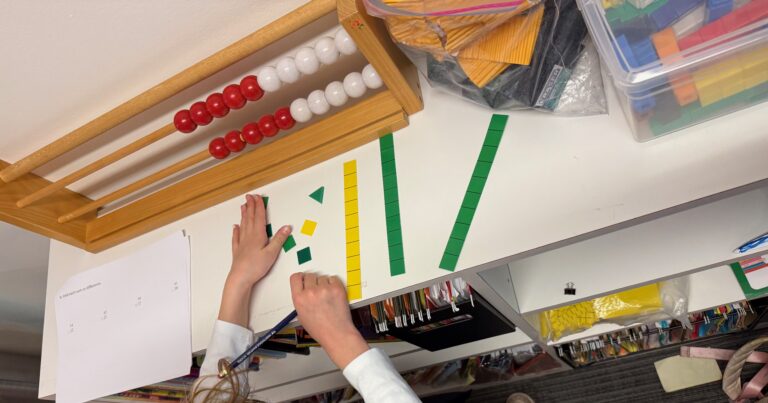
A note on the name of this blog. I listened to the most beautiful description of what we want to build in mathematicians several weeks ago. A brilliant colleague of mine (Pete Prince, to be specific, who is co-head of…

A note on the name of this blog. I listened to the most beautiful description of what we want to build in mathematicians several weeks ago. A brilliant colleague of mine (Pete Prince, to be specific, who is co-head of…
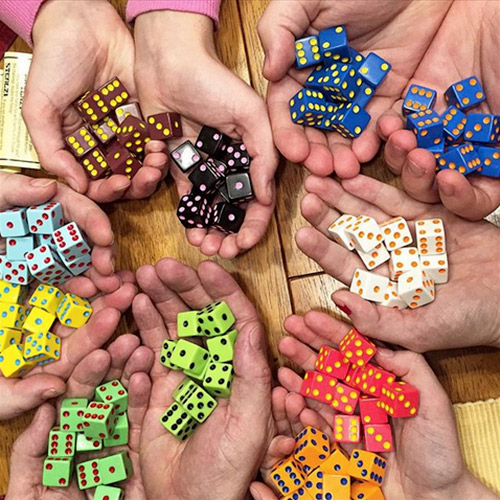
If you’ve read the previous post on the fundamentals of counting, then subitizing is not news to you. If you haven’t yet, here is a link to that post! Tenzi is one of my favorite at-home-fun-for-everyone games that has a…
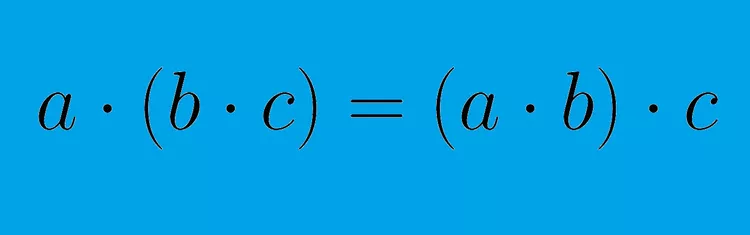
Today we briefly talked about something I’m not going to name for the students just yet, because we are still playing! We’re on a cliffhanger until Monday. We left this unresolved for now… What I can tell you is that…

In honor of Earth Day, I wanted to take a moment to share part of a TedX talk from Australian math educator Eddie Woo. He shares the most magical explorations of what math is and how it is apparent in…

Data literacy is one of the more important skills we can build in young mathematicians, and one that is very fun to support both in the classroom and at home. There is so much to understand about the world when…
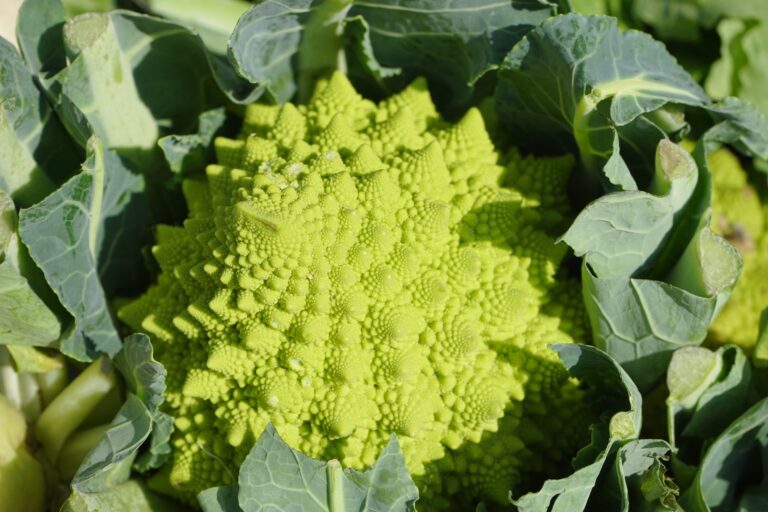
April marks the 30th year of National Poetry Month and with it a new way to explore the math that infuses the beauty of language. What do you think about when you consider how math and poetry might be related?…

You’re dropping one kid at a birthday party in midtown and you’ve got the other kid in tow. Heading home is an option, though the moment you arrive home it will be time to reverse course and head back to…
“Use the math you know.” It is one of my most important mantras. In fact, I rarely have to say it anymore. When I review an upcoming homework assignment with my students, and we come to a tricky looking or…

We’ve covered the critical pieces of developing counting with meaning in this post. What happens next? Enter additive thinking! When counting gives way to reasoning, it is the beginning of additive thinking. The journey from “count everything” to “just know…

Dice and dominoes are probably some of the first quantities we consciously subitize and assign a numerical value to as children. (Subitizing, you say? What’s that? Check out this post on the many nuances of counting.) The “pip” or dot…