
You’re dropping one kid at a birthday party in midtown and you’ve got the other kid in tow. Heading home is an option, though the moment you arrive home it will be time to reverse course and head back to birthday party pick-up. Central Park is an option but it is one of those blustery neither winter nor spring days that stings the ears just enough to make it unpleasant. MoMA it is, but MoMA with a goal.
Throw on those math colored glasses and go on a math hunt through modern art.
The best part about a math hunt, is that the kid is in charge. They identify the math. What they say counts, counts (no pun intended). Articulating the why behind their selections is one of the most important pieces of the math hunt. Math in general is about articulating generalizations and justifying claims, and this is a perfectly low stakes, high engagement, super fun way to practice.
The fruits of our trip:
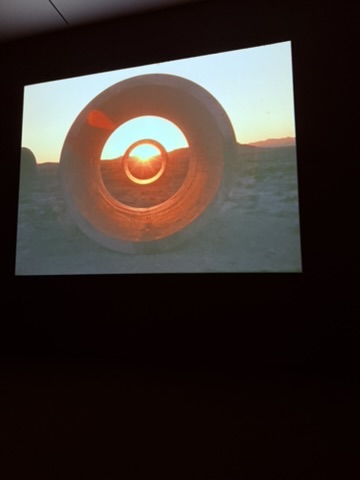
Nancy Holt. Sun Tunnels (1973–1976)
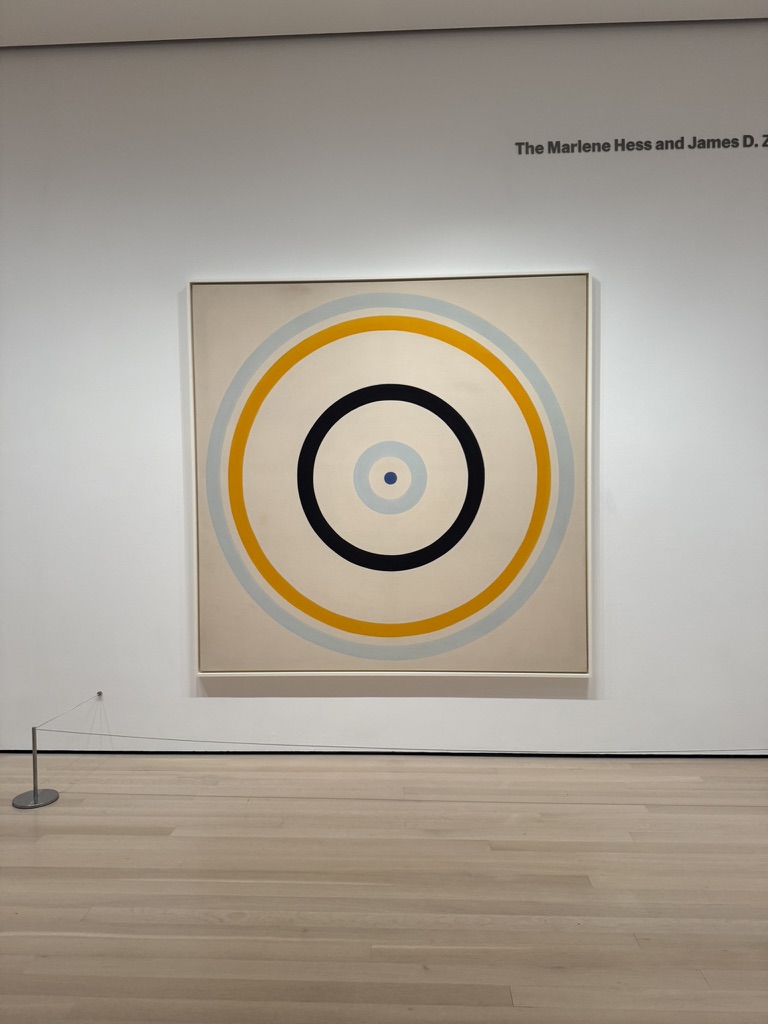
Kenneth Noland. Turnsole (1961)
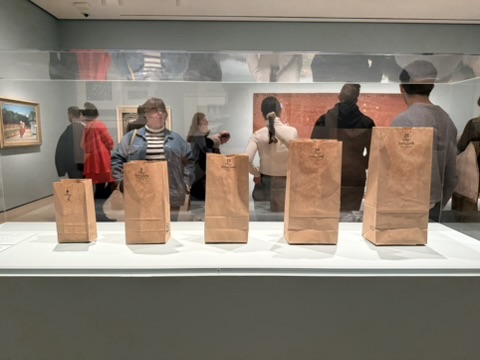
Margaret E. Knight, Charles B. Stilwell. Flat-Bottomed Paper Bag (Designed 1870s-1880s)
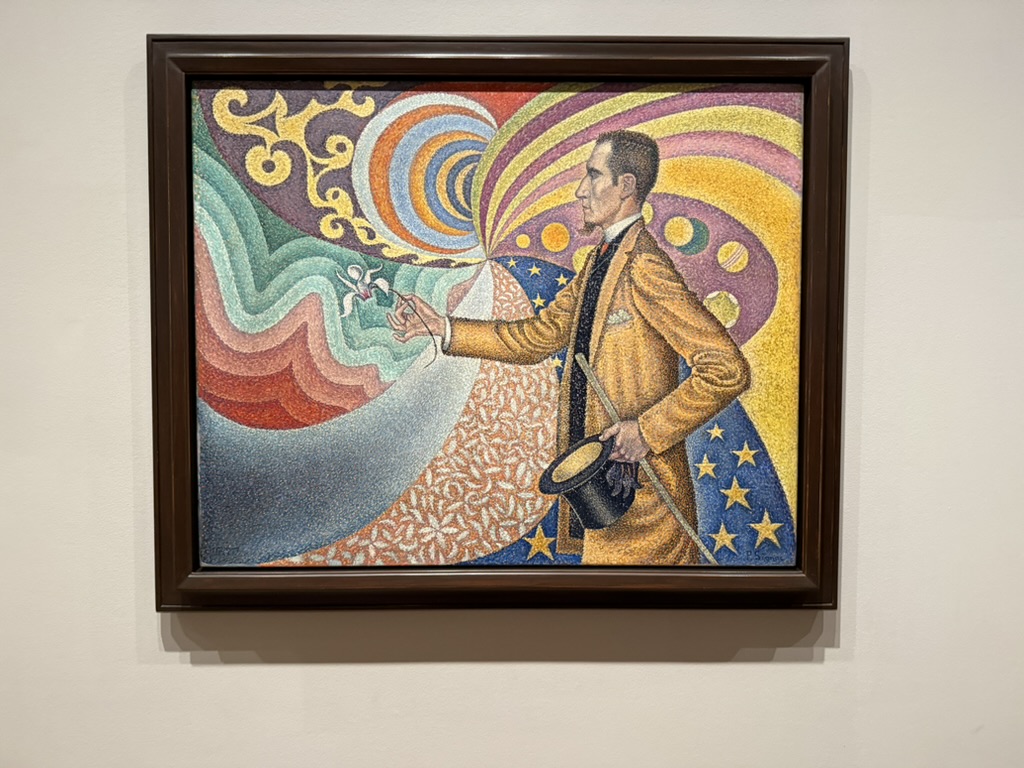
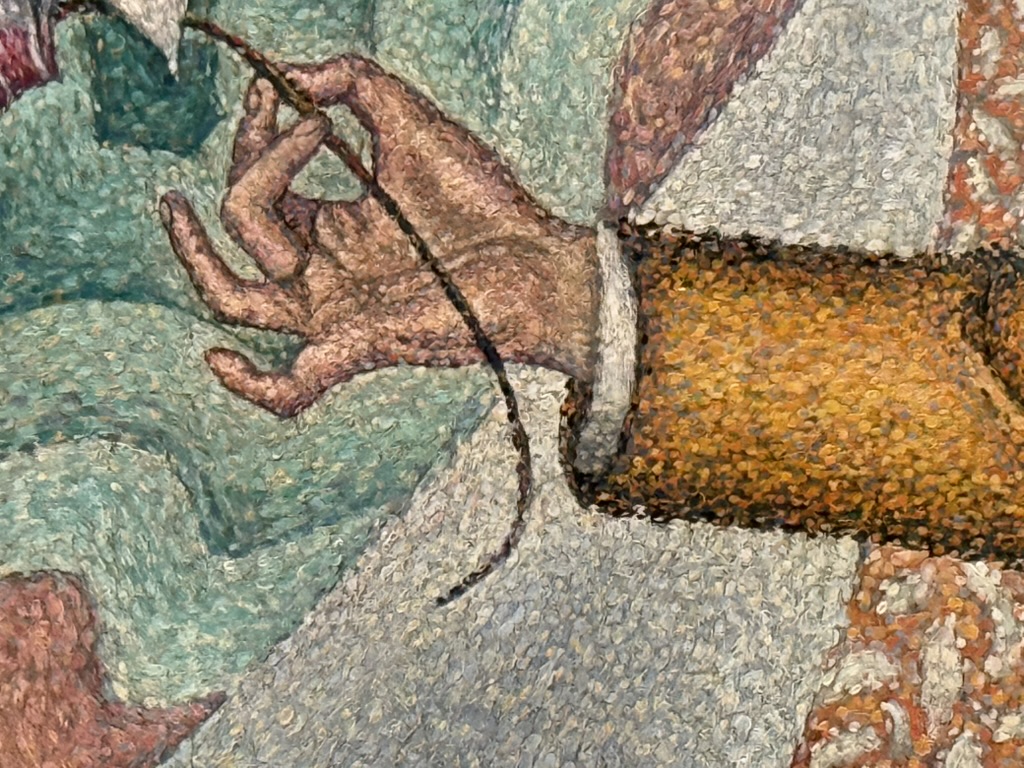
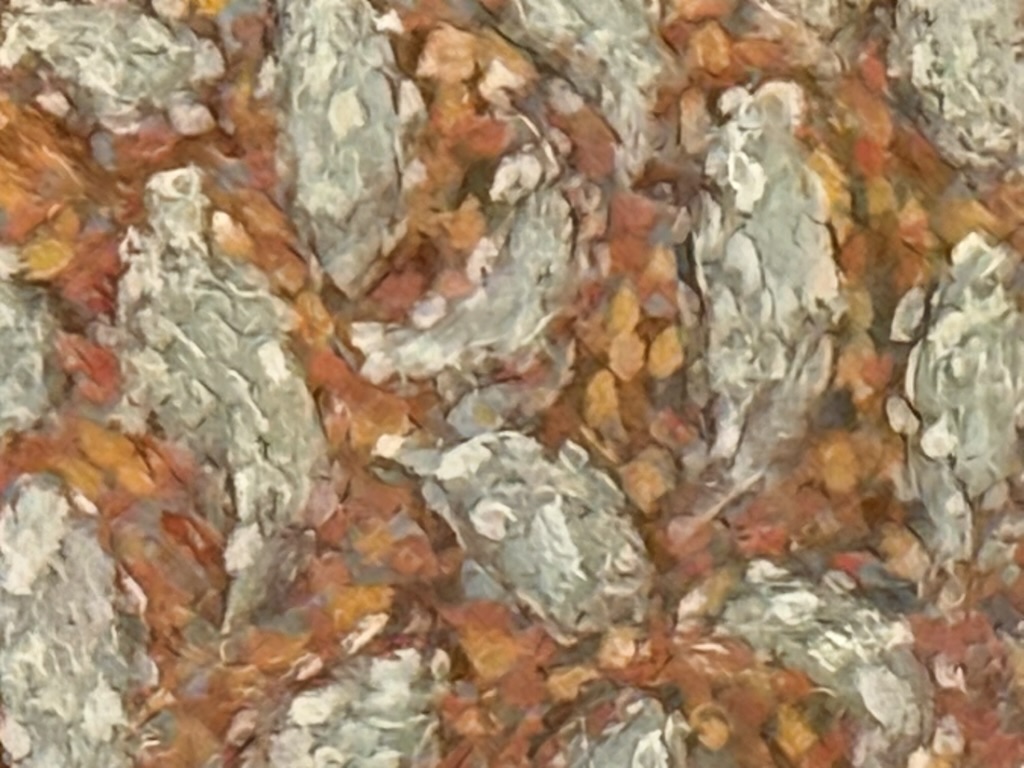
Paul Signac. Opus 217. Against the Enamel of a Background Rhythmic with Beats and Angles, Tones, and Tints, Portrait of M. Félix Fénéon in 1890 (1890)
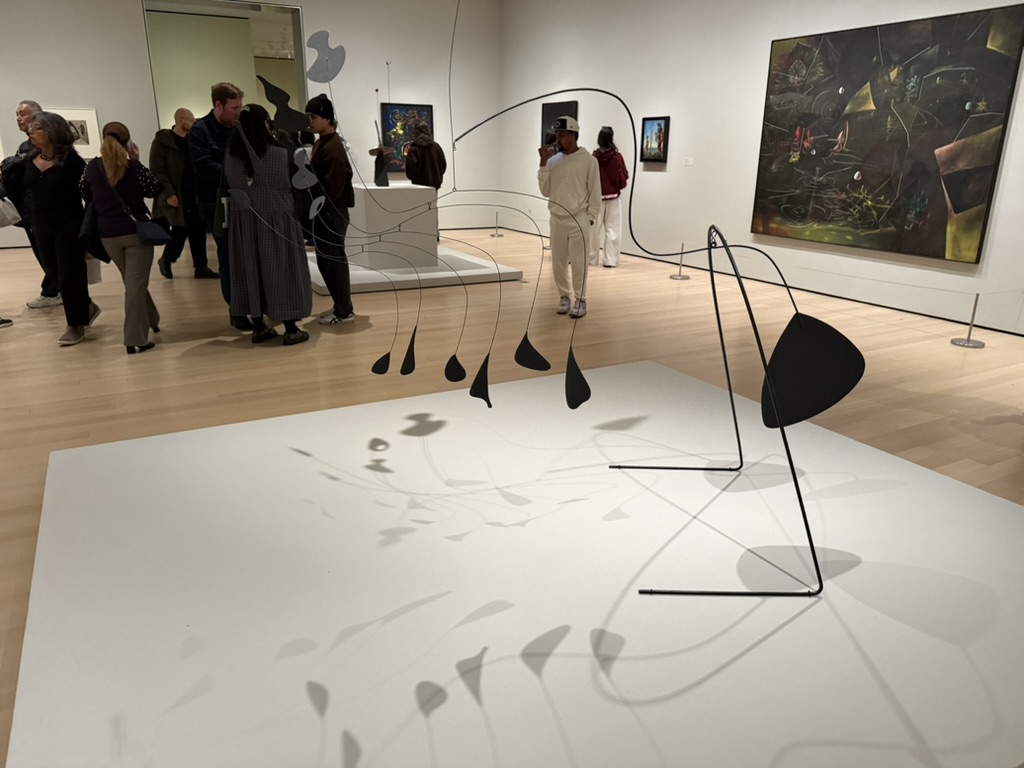
Alexander Calder. Spider. (1939)
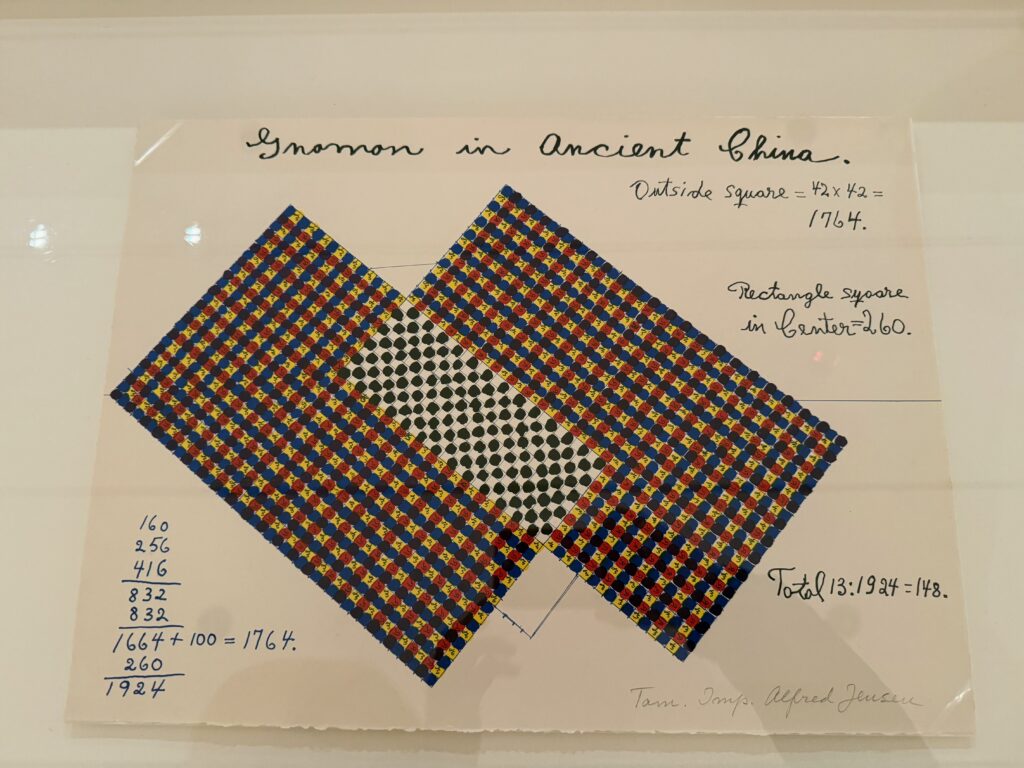
Alfred Jensen. In-text plate (folio 19) from A Pythagorean Notebook (1965)
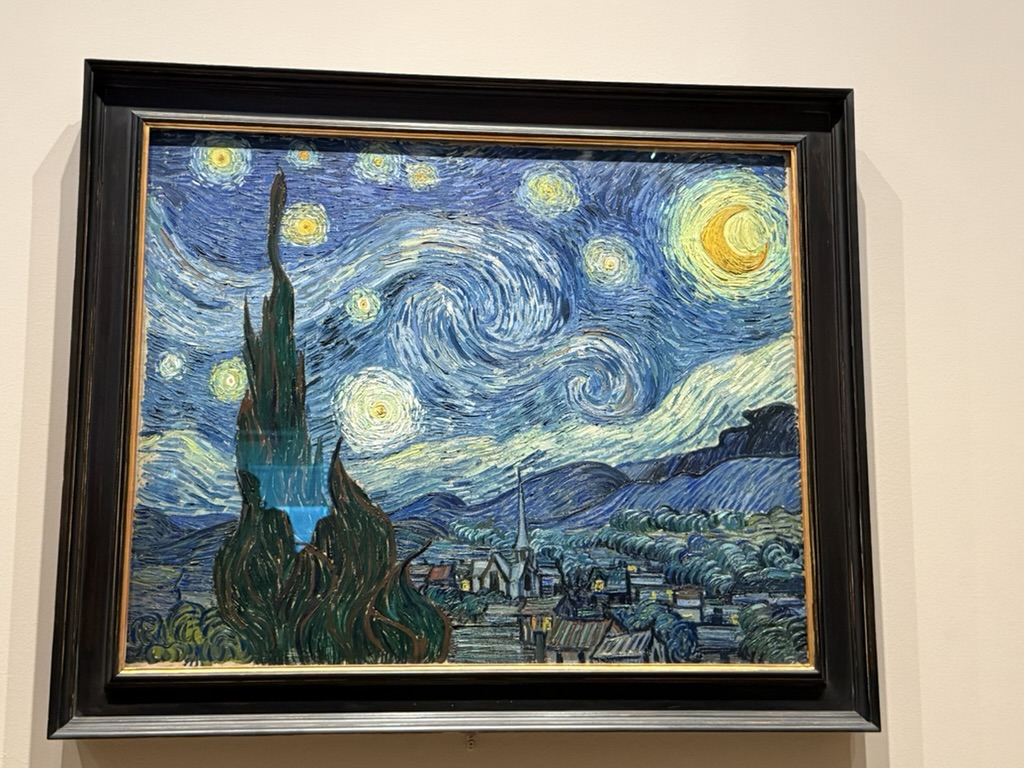
Vincent Gan Gogh. The Starry Night, Saint Rémy, June 1889 (1889)
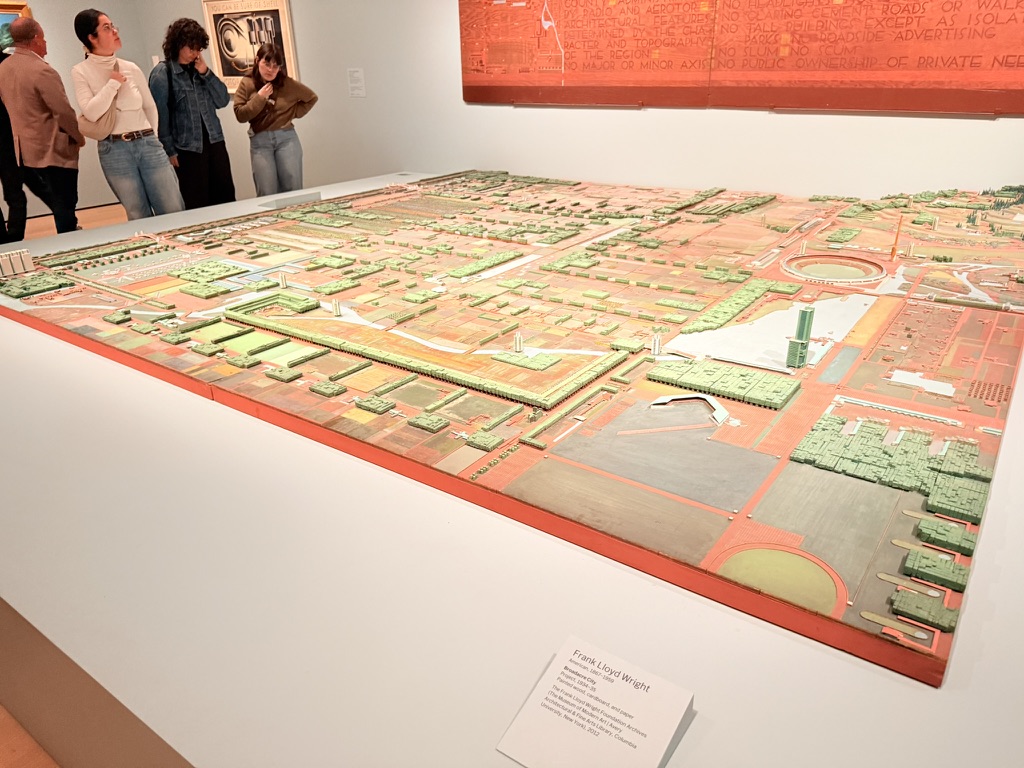
Frank Lloyd Wright. Broadacre City Project (Model in four sections). (1934–35)
What math do YOU see in each of these pieces? Please feel free to add your thoughts in the comments!