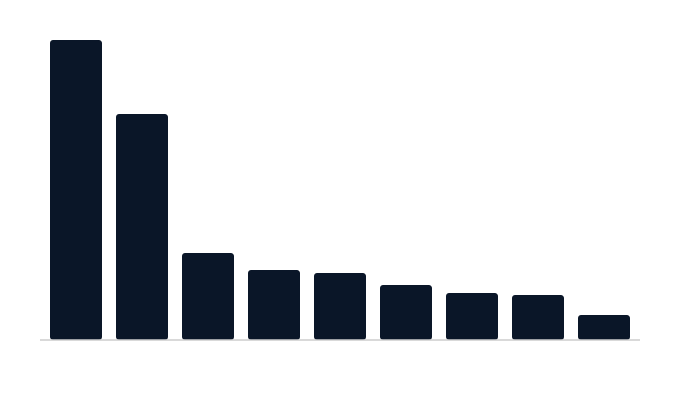

Data literacy is one of the more important skills we can build in young mathematicians, and one that is very fun to support both in the classroom and at home. There is so much to understand about the world when we learn to read it through data. Here’s the thing, though: a complete graph can be overwhelming, especially for young learners, to really make sense of. Why not build data reading skills incrementally, mindfully, in a way that encourages that practice of noticing and wondering as we go, connecting the story of the data to our lived experience. Math is everywhere!
A tool called the slow reveal graph, developed by Massachusetts math specialist and all-around extraordinary educator Jenna Laib, does exactly this. Laib strips a graph down into its most basic pasts and then takes young mathematicians on a journey of discovery where she reveals one layer at a time so students can notice, wonder, discuss, and predict before the full picture comes into view.
Below is a slow reveal graph I built from real data…. Give it a try before you read on (major spoiler alert!)
I had the honor of buying my 2026 Girl Scout Cookie haul from troop 3228 who happen to be members of the third grade here at Nightingale. Of course, they mentioned the cost per box was $7 and –without my prompting– shared that their sales were helping them learn their 7s times tables. That got me thinking… where else is the math in Girl Scout cookie sales? A very thoughtful scout mom sent me some cookie sales facts and figures, which I then adapted to use for some problem solving in class… and to create this slow reveal graph! How impressive were these sales?!
And for the record, I bought Thin Mints.