
This post features ideas and text from student guest editor E.B. from Class III.
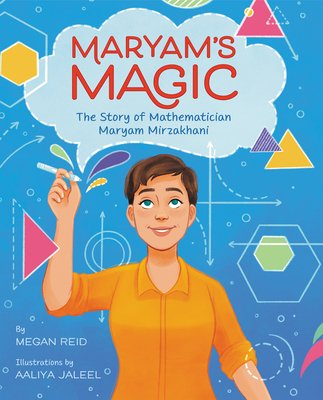
Maryan Mirzakhani is one of the mathematicians we learn about as we explore the habits of mind of mathematicians who have accomplished amazing things. We often begin by reading the book Maryam’s Magic: The Story of Mathematician Maryam Mirzakhani by Megan Reid.
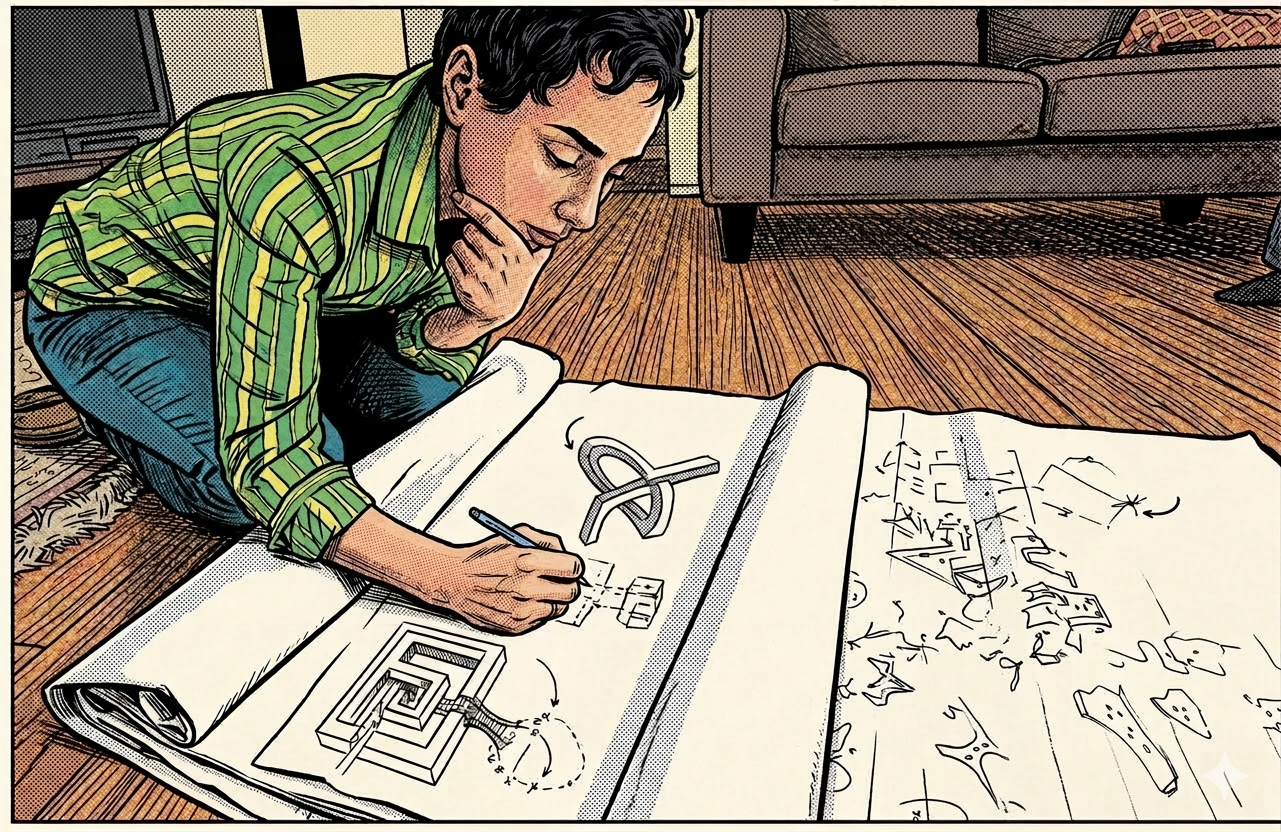
Maryam Mirzakhani grew up in Tehran, Iran, as a lover of stories! She dreamed of becoming a writer. She wasn’t convinced she was a fan of mathematics until middle school. With the help of an encouraging teacher and the camaraderie of a best friend with whom she engaged in problem solving using an old Math Olympiad book (whats more low stakes and fun than conquering some tough problems with a good buddy!?) she finally began to se herself as a mathematician. She won gold medals at the International Math Olympiad as a teenager, earned her PhD from Harvard, and became a professor at Stanford. In 2014, she became the first woman ever to win the Fields Medal, the highest honor in mathematics. One of the coolest things about Maryam is her work medium: she did her best thinking spread out on the floor, just covering these giant rolls of paper with drawings and diagrams and doodles, words and thoughts. Sadly, Maryam passed away in 2017 at age 40, but her curiosity and creative approach are incredibly inspiring to young mathematicians.
One of these inspired young mathematicians shared with me that she felt an instant connection to Maryam because she loves drawing too, and like Maryam, she’s a sister. Drawing and math? What a magical pair! That connection led somewhere wonderful: our young mathematician rolled out a big sheet of paper, just like her hero, and dove into a whole self-directed project on pi.
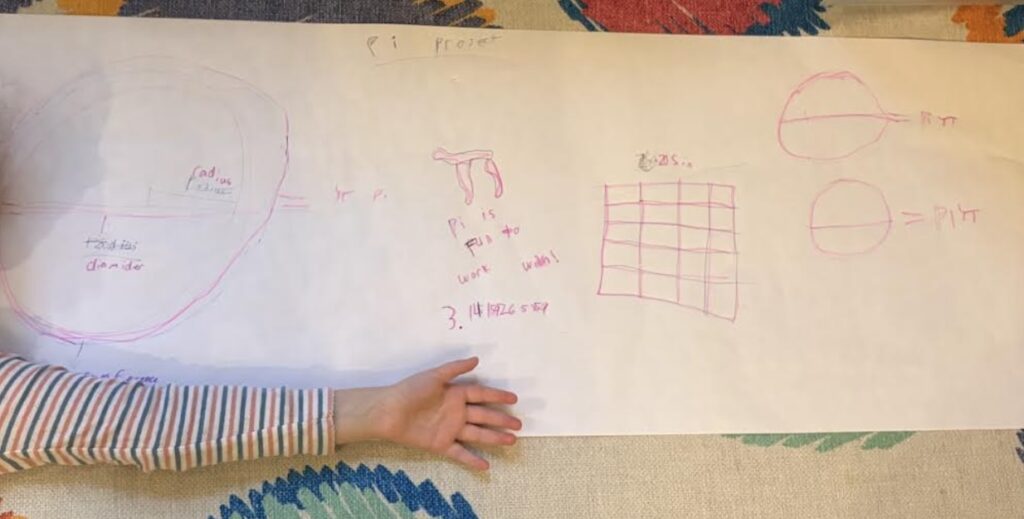
She put it simply: “Pictures can say more than numbers.”
That’s a big part of Maryam Mirzakhani’s work. Math doesn’t have to live in equations. It can start as a doodle, and that doodle can grow into arrays, symmetry, models, and meaning. If Maryam could cover the floor with drawings and change the world of math, what might you do with a big roll of paper and a question you can’t stop thinking about?