
April marks the 30th year of National Poetry Month and with it a new way to explore the math that infuses the beauty of language. What do you think about when you consider how math and poetry might be related?
Haiku
One poetic form that comes to mind is Haiku, a traditional Japanese form consisting of 3 nonrhyming lines: a line of 5 syllables, another of 7 syllables, and a final line of 5 syllables. It occurs to me as I write this that 5, 7, and 5 are all prime numbers. The sum of all the syllables is 17–another prime number. The 3 lines make another prime number. The syllable counts specific to the Haiku are inherently mathematical.
Try your hand at Haiku.
Fibonacci Poetry
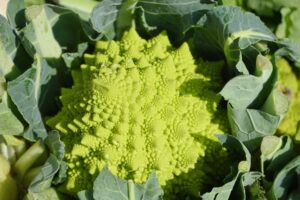
The Fibonacci sequence (something we chat about in math classes, often accompanied by Arthur Benjamin’s wonderful Ted Ed video linked here and worth a watch) is hardwired into nature and all things naturally beautiful via its ubiquitous spirals and the golden ratio. The sequence itself is poetry. Try your hand at constructing verse with syllable counts that mirror Fibonacci’s sequence (each new term is equal to the sum of the two previous terms) – 1, 1, 2, 3, 5, 8, 13… and so on. Of course Fibonacci poetry is infinite….so I’ve limited you to the seventh term.
Diamante
Poetry is not just rhythmic, it is visual. Geometry and symmetry plays a major role in some poetic forms. Take, for instance, the Diamante, which is distinguished by its 7 lines formed into a diamond shape. The number of words in each line follow a palindromic rule. It is the same sequence foward and backward: 1-2-3-4-3-2-1. So much symmetry!
Nonet
The geometry of the Nonet is also pleasing to the eye. A descent of syllables per line 9-8-7-6-5-4-3-2-1, a backward number word sequence. Subtraction in its poetic form.
I hope you will send in some of the mathematical verses created! Perhaps you might consider crafting your own rhythmic, symmetrical, sequence of words for others to try crafting verse to!
Want the blog to come to you?
Get new content delivered straight to your inbox 2x a month — including: