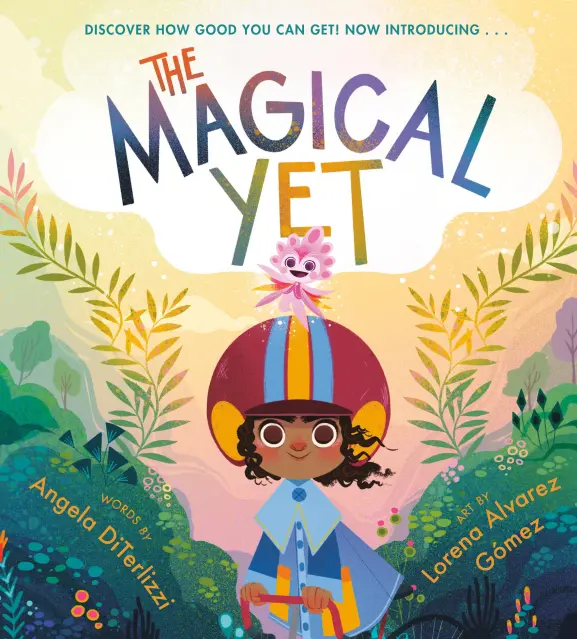

The final Books and Big Ideas of the 2025-2026 school year has taken place, and the story so carefully chosen by our incredible Lower School librarian was The Magical Yet by Angela DiTerlizzi. A math educator could not have wished for a more relevant story to one of the most powerful mindsets that can be nurtured in a growing mathematician.
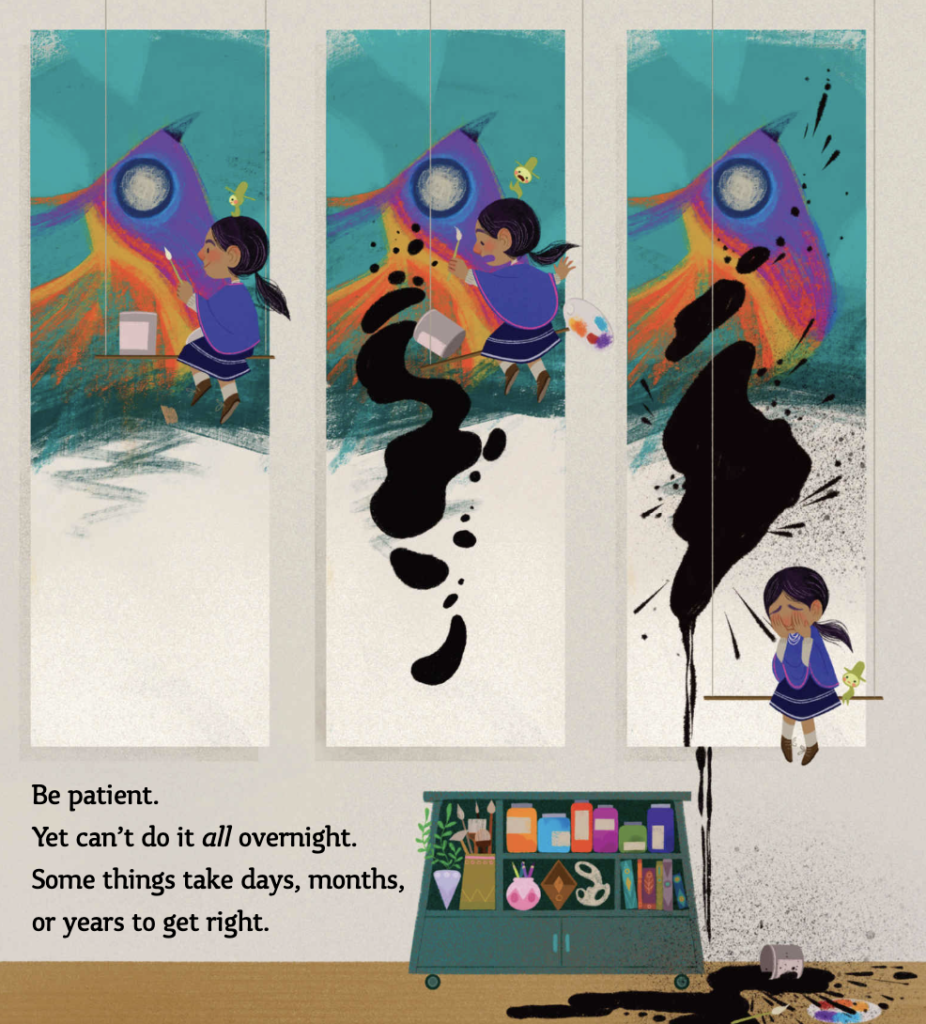
You see, The Magical Yet is all about trying new things, things that take a lot of cognitive or physical or emotional effort to try and to learn. Most importantly, these things take time. And this is an idea that is so important to math.
YET.
When we limit our definition of mathematics to this binary idea of right or wrong, quick or slow, you get it or you don’t, we are discrediting the complexities of what is actually a very nuanced and beautiful language! There’s a lot of middle ground in math learning!
A dear colleague of mine, and former Nightingale teacher, used to preface every new concept to her students with the following: Give it three days.
“I don’t understand it!” Give it three days.
“This is so hard!” Give it three days.
“Should I know this by now?” Give it three days.
A Kiwi researcher named Graham Nuthall spent years observing classrooms and found that students need to encounter a concept at least three separate times before it really sticks. Basically, a student must focus her cognitive energy on an idea multiple times to begin to consolidate that idea, or commit it to long term memory. One exposure? Not yet! Two? Not yet!
The idea of yet is very powerful. It gives students an opportunity to be okay with the uncertainty of not knowing or the discomfort of struggle when a topic is introduced. The grappling, the struggle, the uncertainty is all crucially important to the learning. That is the leading edge of a child’s knowledge pushing out, out, out and absorbing more and more of the unknown as the child catches up to it. The concept needs to be returned to, and returned to in a variety of presentations and contexts before it starts to click. This applies to all learners.
Yet builds resilience and optimism. It allows a child the mental and emotional space to figure it out rather than crumple at the first sign of difficulty. Rather than make the split second decision that they are “not a math person” or they “can’t do it.” And you can harness The Magical Yet at home.
First, listen for it. When your child says “I can’t do this” or “I don’t get it” or simply shuts down in frustration when something is new, try not to rush in. I know we want to rescue our children from the discomfort of struggle (as my mom always says “you’re only as happy as your least happy child” and in a moment of unhappiness, well… there you go). Rescue can inadvertently send the message that the struggle is a problem, when it is actually learning happening in real time. Just say the word…
“Yet.“
And give it three days, or a few more encounters. Then see if The Magical Yet… worked its magic.